The Journal
PCOS vs Hypothalamic Amenorrhea: How to Tell the Difference
December 23, 2025
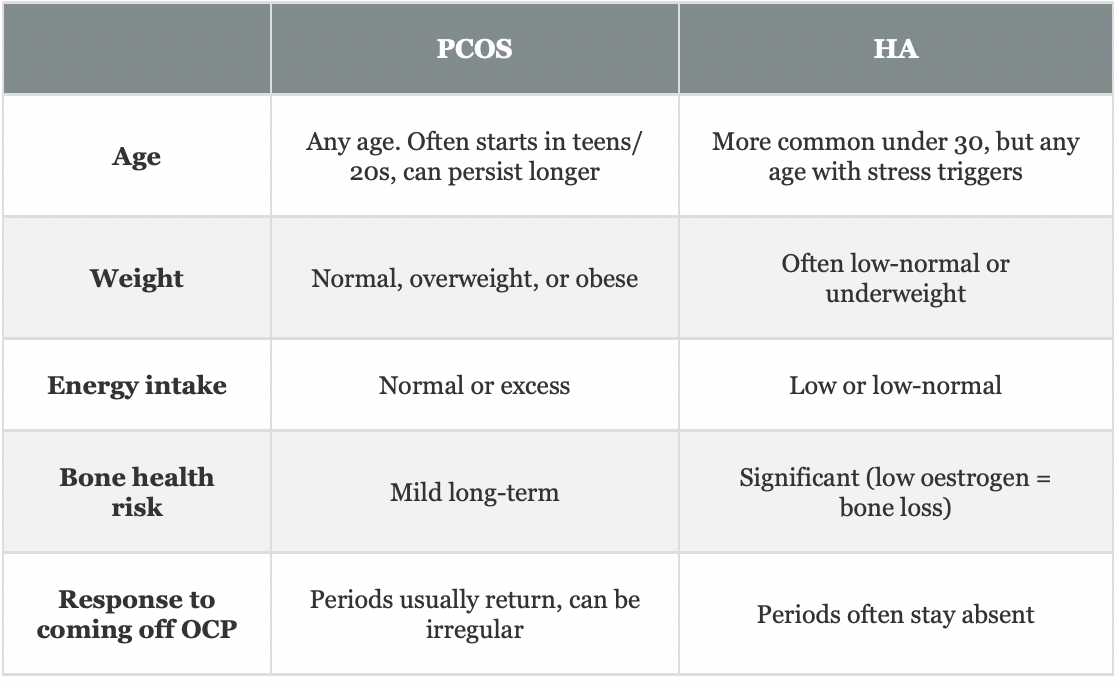
If you have irregular or missing periods, common explanations you may have read about include Polycystic Ovary Syndrome (PCOS) and Hypothalamic Amenorrhea (HA). On the surface, these can both present in a similar fashion - irregular or absent cycles, acne, polycystic ovaries on an ultrasound - however, the underlying drivers are completely different. Mistaking one for the other and using incorrect treatment can delay recovery and make symptoms worse.

- Absent or irregular periods
- Acne or hair changes
- Polycystic-looking ovaries on ultrasound (yes, this can happen in HA too!)
- Irregular or absent periods
- When periods come they can be normal or heavy
- Acne, commonly along the jawline
- Hirsutism (facial/body hair) and/or scalp hair thinning
- Weight gain or difficulty losing weight
- Skin tags
- Acanthosis nigricans
- Low mood, anxiety, depression
- Complete absence of periods for 3+ months
- Fatigue
- Cold hands/feet, dry skin
- Hair loss
- Anxiety or low mood
- Low libido
- Poor sleep
- Light-headedness or dizziness
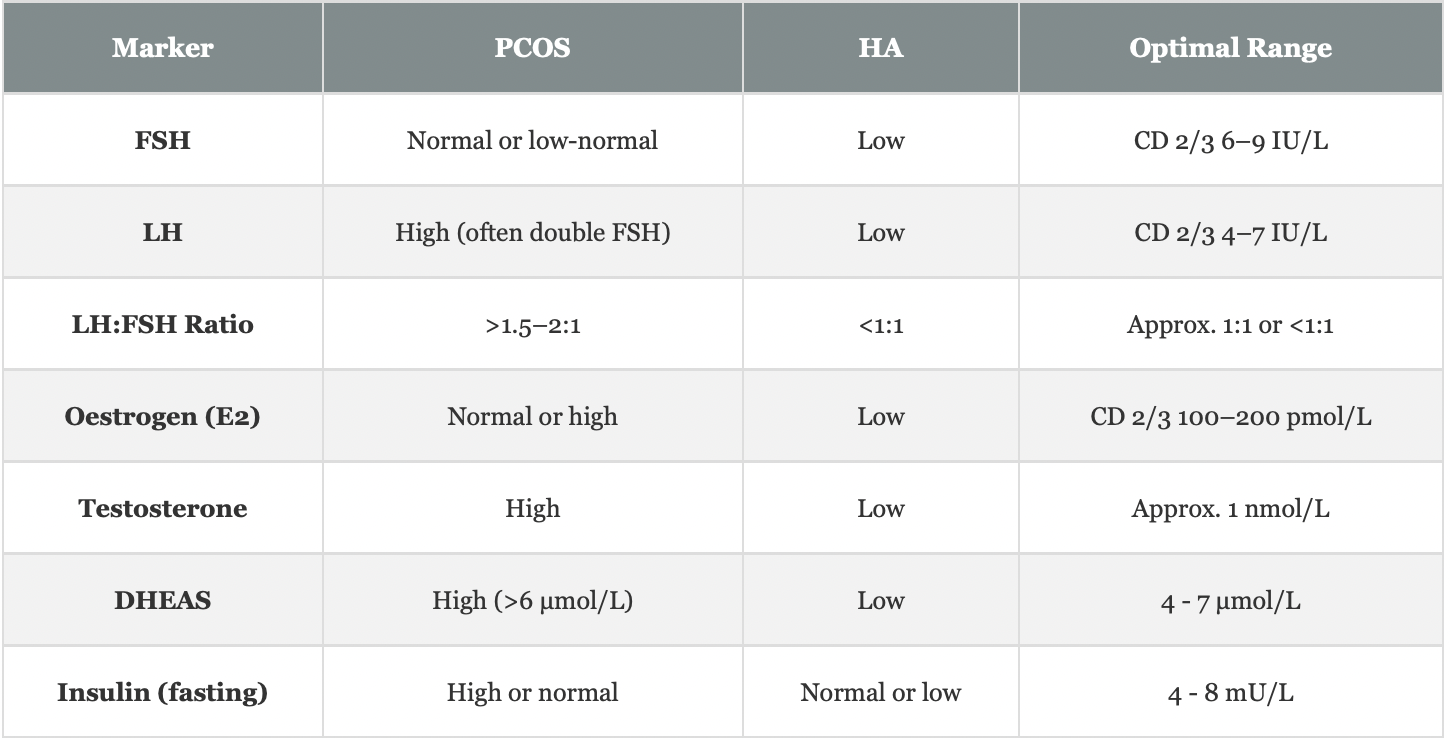
- Cycle day 2/3 pathology. FSH, LH, oestradiol, prolactin, testosterone, androstenedione, DHEAS, SHBG, FAI, fasting insulin.
- Progesterone 7 days post-ovulation (typically ‘day 21’ if you ovulate on day 14). To determine if ovulation is occurring.
- Thyroid and prolactin. To rule out other causes. Ideally a full thyroid panel (TSH, T3, T4, thyroid antibodies), and cycle day 2/3 prolactin.
- A pelvic ultrasound. Part of the traditional diagnostic criteria. Not definitive in determining if PCOS or HA as polycystic ovaries can occur in both.
- Bone density (DEXA scan). Relevant if amenorrhea has occurred > 6 months.
Pathology - PCOS vs HA vs optimal ranges
- History of low energy availability (eg under-eating, excessive exercise, high stress)
- Low FSH/LH, low oestrogen, no withdrawal bleed on progesterone challenge
- Normal prolactin, thyroid, and brain imaging
- Other causes for amenorrhoea excluded (pregnancy, PCOS, ovarian insufficiency)
- Irregular or absent periods
- Clinical or biochemical signs of high androgens (eg acne, elevated testosterone)
- Polycystic ovaries on ultrasound (> 20 per ovary)
- How to tell if you have PCOS
- Therapies I prescribe for PCOS
- Nutrients to consider for PCOS
- A Naturopathic guide to coming off the pill (this contains information on supporting HA and PCOS)
If you’re unsure which one of these conditions fits your picture, please get in touch. I help women decode their hormones every day.
Author
Jaclyn Cave
BHSc (Nat), BComm (Soc)
Masters Womens Health Med (UNSW)
References:
Beitl, K., Dewailly, D., Seemann, R., et al. (2022). Polycystic Ovary Syndrome Phenotype D Versus Functional Hypothalamic Amenorrhea With Polycystic Ovarian Morphology: A Retrospective Study About a Frequent Differential Diagnosis. Frontiers in Endocrinology, 13, 904706.
Gordon, C. M., Ackerman, K. E., Berga, et al. (2017). Functional Hypothalamic Amenorrhea: An Endocrine Society Clinical Practice Guideline. The Journal of Clinical Endocrinology & Metabolism, 102(5), 1413-1439.
Morrison, A. E. (2021). A review of the pathophysiology of functional hypothalamic amenorrhoea in women subject to psychological stress, disordered eating, excessive exercise or a combination of these factors. Clinical Endocrinology, 95(2), 229-238.
Ott, J., Robin, G., Hager, M., & Dewailly, D. (2025). Functional hypothalamic amenorrhoea and polycystic ovarian morphology: a narrative review about an intriguing association. Human Reproduction Update, 31(1), 64-79.
Saadedine, M., Kapoor, E., & Shufelt, C. (2023). Functional Hypothalamic Amenorrhea: Recognition and Management of a Challenging Diagnosis. Mayo Clinic Proceedings, 98(9), 1376-1385.
Teede, H. J., Tay, C. T., Laven, et al. (2023). Recommendations From the 2023 International Evidence-based Guideline for the Assessment and Management of Polycystic Ovary Syndrome. The Journal of Clinical Endocrinology & Metabolism, 108(10), 2447-2469.
The Journal
PCOS vs Hypothalamic Amenorrhea: How to Tell the Difference
December 23, 2025
If you have irregular or missing periods, common explanations you may have read about include Polycystic Ovary Syndrome (PCOS) and Hypothalamic Amenorrhea (HA). On the surface, these can both present in a similar fashion - irregular or absent cycles, acne, polycystic ovaries on an ultrasound - however, the underlying drivers are completely different. Mistaking one for the other and using incorrect treatment can delay recovery and make symptoms worse.
- Absent or irregular periods
- Acne or hair changes
- Polycystic-looking ovaries on ultrasound (yes, this can happen in HA too!)
- Irregular or absent periods
- When periods come they can be normal or heavy
- Acne, commonly along the jawline
- Hirsutism (facial/body hair) and/or scalp hair thinning
- Weight gain or difficulty losing weight
- Skin tags
- Acanthosis nigricans
- Low mood, anxiety, depression
- Complete absence of periods for 3+ months
- Fatigue
- Cold hands/feet, dry skin
- Hair loss
- Anxiety or low mood
- Low libido
- Poor sleep
- Light-headedness or dizziness
- Cycle day 2/3 pathology. FSH, LH, oestradiol, prolactin, testosterone, androstenedione, DHEAS, SHBG, FAI, fasting insulin.
- Progesterone 7 days post-ovulation (typically ‘day 21’ if you ovulate on day 14). To determine if ovulation is occurring.
- Thyroid and prolactin. To rule out other causes. Ideally a full thyroid panel (TSH, T3, T4, thyroid antibodies), and cycle day 2/3 prolactin.
- A pelvic ultrasound. Part of the traditional diagnostic criteria. Not definitive in determining if PCOS or HA as polycystic ovaries can occur in both.
- Bone density (DEXA scan). Relevant if amenorrhea has occurred > 6 months.
Pathology - PCOS vs HA vs optimal ranges
- History of low energy availability (eg under-eating, excessive exercise, high stress)
- Low FSH/LH, low oestrogen, no withdrawal bleed on progesterone challenge
- Normal prolactin, thyroid, and brain imaging
- Other causes for amenorrhoea excluded (pregnancy, PCOS, ovarian insufficiency)
- Irregular or absent periods
- Clinical or biochemical signs of high androgens (eg acne, elevated testosterone)
- Polycystic ovaries on ultrasound (> 20 per ovary)
- How to tell if you have PCOS
- Therapies I prescribe for PCOS
- Nutrients to consider for PCOS
- A Naturopathic guide to coming off the pill (this contains information on supporting HA and PCOS)
If you’re unsure which one of these conditions fits your picture, please get in touch. I help women decode their hormones every day.
Author
Jaclyn Cave
BHSc (Nat), BComm (Soc)
Masters Womens Health Med (UNSW)
References:
Beitl, K., Dewailly, D., Seemann, R., et al. (2022). Polycystic Ovary Syndrome Phenotype D Versus Functional Hypothalamic Amenorrhea With Polycystic Ovarian Morphology: A Retrospective Study About a Frequent Differential Diagnosis. Frontiers in Endocrinology, 13, 904706.
Gordon, C. M., Ackerman, K. E., Berga, et al. (2017). Functional Hypothalamic Amenorrhea: An Endocrine Society Clinical Practice Guideline. The Journal of Clinical Endocrinology & Metabolism, 102(5), 1413-1439.
Morrison, A. E. (2021). A review of the pathophysiology of functional hypothalamic amenorrhoea in women subject to psychological stress, disordered eating, excessive exercise or a combination of these factors. Clinical Endocrinology, 95(2), 229-238.
Ott, J., Robin, G., Hager, M., & Dewailly, D. (2025). Functional hypothalamic amenorrhoea and polycystic ovarian morphology: a narrative review about an intriguing association. Human Reproduction Update, 31(1), 64-79.
Saadedine, M., Kapoor, E., & Shufelt, C. (2023). Functional Hypothalamic Amenorrhea: Recognition and Management of a Challenging Diagnosis. Mayo Clinic Proceedings, 98(9), 1376-1385.
Teede, H. J., Tay, C. T., Laven, et al. (2023). Recommendations From the 2023 International Evidence-based Guideline for the Assessment and Management of Polycystic Ovary Syndrome. The Journal of Clinical Endocrinology & Metabolism, 108(10), 2447-2469.
Blending evidence-based medicine with traditional Naturopathic principles