The Journal
The Benefits of Omega-3s In Preconception, Pregnancy, & Breastfeeding
Oct 16, 2025
During preconception care, it’s essential to focus on boosting our intake of omega-3 fatty acids. Why? Because they’re not produced in the body, and therefore we need to get them through our diets. During pregnancy, your body’s stores of these precious fats often dip as they’re prioritised for the developing baby, so building them up well before conception and maintaining those amounts during a pregnancy is vital. In many cases, I recommend a combination of both optimising your dietary intake of omega-3 rich foods, and taking a supplement to my clients. Let me explain why!

What are omega-3 fatty acids?
Omega-3 fatty acids are long-chain polyunsaturated essential fatty acids (EFAs) that our bodies can’t make on their own, so they must come from our diet. Other EFAs include omega-6s like alpha-linolenic acid (ALA) and linoleic acid (LA), and together, these fats handle vital functions like oxygen transport, energy storage, cell membrane integrity, inflammation regulation, and cell growth. While we can synthesise saturated and monounsaturated fats, omega-3s and omega-6s are strictly dietary.
Eicosapentaenoic acid (EPA) and docosahexaenoic acid (DHA), the star players in omega-3s, are precursors to prostaglandins, thromboxanes, and leukotrienes - molecules that modulate inflammation and offer a host of anti-inflammatory benefits. A balanced omega-3 to omega-6 ratio of 1:3 or lower promotes anti-inflammatory and immune-boosting effects. But in today’s Western diet, ratios often skew to 15:1 or higher, fuelling inflammation and suppressing immunity. And as we know, chronic inflammation underpins so many modern health issues - making your fatty acid balance a big deal!

Importance during preconception & pregnancy
In preconception care, omega-3 supplementation can lower risks including:
- Preterm birth before 37 weeks
- Early preterm birth before 34 weeks
- Low birth weight babies
- Preeclampsia
- Hypertension
- Perinatal depression
- Postpartum depletion
It may also reduce perinatal death and neonatal care admissions in some cases. Plus, it supports foetal brain and retina development, potentially lowering risks of cerebral palsy. A fascinating fact: these insights stem from observations in fish-heavy cultures, like the Inuit, where babies often have higher birth weights and longer gestations - a true representation of how our diet can shape outcomes!
EPA and DHA help regulate blood vessel constriction, which explains their role in reducing the risks of high blood pressure and preeclampsia during pregnancy. This same action might delay labour by curbing prostaglandins that ripen the cervix, potentially extending pregnancy length and boosting birth weight. I recommend stopping fish oil 2 weeks before your estimated due date for this reason, and to avoid excess blood loss during labour, as fish oil has blood thinning properties.
Benefits while breastfeeding
Omega-3s remain vital during breastfeeding, offering incredible benefits for both mum and baby. For mothers, EPA and DHA help reduce inflammation, supporting recovery from childbirth and lowering the risk of postpartum depression. They also aid in maintaining energy levels and heart health during this demanding time. These fatty acids pass directly into breast milk, with DHA being especially critical for your baby’s brain and eye development, supporting cognitive growth and strengthening immune system function. Studies show breast milk DHA levels reflect maternal intake, so continuing supplementation ensures optimal transfer.
Dietary sources of omega-3s
Top sources include:
- Oily fish and seafood
- Eg mackerel, salmon, cod, oysters, sardines, and anchovies
- Seafood-derived oils
- Eg krill or cod liver oil
For vegetarians, focus on:
- Algae and algae oils
- Flaxseeds/linseeds and their oils
- Chia seeds
- Walnuts
→ These contain the best omega-3 to omega-6 ratios.
Hemp seeds, pasture-raised eggs, and edamame contain levels of omega-3s too.

ALA → EPA → DHA conversion
Your body converts fish-sourced EPA and DHA more efficiently than plant-based ALA. Plant sources start as ALA and require multiple enzymatic steps and require cofactors like zinc and vitamin B6 to become EPA and DHA. These conversion rates are low, about 5-10% to EPA and under 5% to DHA in adults. It is possible to get your EPA and DHA from plant-based sources, but it’s certainly not as easy or as straightforward!
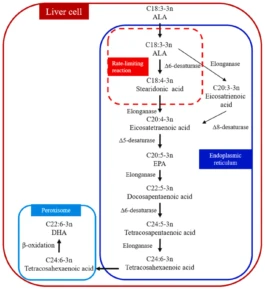
Biosynthetic conversion pathway of ALA to DHA. The first step where ALA is converted to stearidonic acid is a rate-limiting reaction. Source.
How much to take
We are looking specifically at the levels of EPA and DHA here. If you cannot see these listed on your supplement, I suggest looking for a high quality one that has EPA/DHA amounts specifically listed.
In a supplement, I like to see levels of EPA sitting around 500mg/1g, and DHA around 300mg/1g of fish oil. 1 capsule usually equates to about 1g, so each capsule should contain this. Depending on the needs of the individual, anywhere from 2 – 4 capsules daily is what I would prescribe for pre-conception and pregnancy care. The amount you need to take will depend on your dietary intake of omega-3s - guidelines suggest more for low-seafood eaters, vegetarians, and vegans.
What about quality? Isn’t seafood contaminated?
This is such an important component of supplementation, especially regarding any supplementation that involves animal products. The cheapest fish oil at your local chemist is possibly already oxidised and therefore unlikely to be anti-inflammatory nor health-promoting!
Seafood can contain mercury, pesticides, and PCBs, which is why I am very selective about the fish oil supplements I prescribe. I only recommend sustainable sourced, ultra-purified, molecularly distilled, contaminant-tested omega-3s. I really encourage you here to seek the best quality omega-3 supplementation you can. When choosing to eat seafood, aim to stick to low mercury species and wild-caught if that’s available to you.
If you have any questions on the topic of omega-3s please write them below and I will happily answer! As always, thank you for reading.
Author
Jaclyn Cave
BHSc (Nat), BComm (Soc)
Masters Womens Health Med (UNSW)
References:
Burdge, G. C., & Calder, P. C. (2015). Conversion of alpha-linolenic acid to longer-chain polyunsaturated fatty acids in human adults: A systematic review. British Journal of Nutrition, 113(S2), S6-S15.
Del Gobbo, L. C., Imamura, F., Wu, J. H. Y., Otto, M. C. D. O., & Mozaffarian, D. (2016). Omega-3 polyunsaturated fatty acid biomarkers and coronary heart disease: A meta-analysis of randomized controlled trials. JAMA Cardiology, 1(5), 512-519.
Hibbeln, J. R., Davis, J. M., Steer, C., & Emmett, P. (2017). Maternal seafood consumption in pregnancy and neurodevelopmental outcomes in childhood: An observational cohort study. The Lancet, 369(9561), 578-585.
Kar, S., Wong, M., & Rogozinska, E. (2021). Effects of omega-3 fatty acid supplementation in pregnancy on maternal and infant outcomes: A systematic review and meta-analysis. BMC Pregnancy and Childbirth, 21, 64.
Llanaj, E., Dejanovic, G. M., & Burazerovic, T. (2023). Omega-3 fatty acids for the prevention of preterm birth: A network meta-analysis. PLoS One, 18(3), e0282856.
Middleton, P., Gomersall, J. C., Gould, J. F., Shepherd, E., Olsen, S. F., & Makrides, M. (2018). Omega-3 fatty acid addition during pregnancy. Cochrane Database of Systematic Reviews, (11), CD003402.
Olsen, S. F., & Secher, N. J. (2019). Fish oil intake and pregnancy outcomes: A meta-analysis of randomized controlled trials. American Journal of Clinical Nutrition, 110(2), 367-375.
Zhang, Y., & Wang, H. (2020). Omega-3 fatty acids in pregnancy: Implications for maternal and child health. Nutrients, 12(6), 1654.
The Journal
The Benefits of Omega-3s In Preconception, Pregnancy, & Breastfeeding
Oct 16, 2025
During preconception care, it’s essential to focus on boosting our intake of omega-3 fatty acids. Why? Because they’re not produced in the body, and therefore we need to get them through our diets. During pregnancy, your body’s stores of these precious fats often dip as they’re prioritised for the developing baby, so building them up well before conception and maintaining those amounts during a pregnancy is vital. In many cases, I recommend a combination of both optimising your dietary intake of omega-3 rich foods, and taking a supplement to my clients. Let me explain why!
What are omega-3 fatty acids?
Omega-3 fatty acids are long-chain polyunsaturated essential fatty acids (EFAs) that our bodies can’t make on their own, so they must come from our diet. Other EFAs include omega-6s like alpha-linolenic acid (ALA) and linoleic acid (LA), and together, these fats handle vital functions like oxygen transport, energy storage, cell membrane integrity, inflammation regulation, and cell growth. While we can synthesise saturated and monounsaturated fats, omega-3s and omega-6s are strictly dietary.
Eicosapentaenoic acid (EPA) and docosahexaenoic acid (DHA), the star players in omega-3s, are precursors to prostaglandins, thromboxanes, and leukotrienes - molecules that modulate inflammation and offer a host of anti-inflammatory benefits. A balanced omega-3 to omega-6 ratio of 1:3 or lower promotes anti-inflammatory and immune-boosting effects. But in today’s Western diet, ratios often skew to 15:1 or higher, fuelling inflammation and suppressing immunity. And as we know, chronic inflammation underpins so many modern health issues - making your fatty acid balance a big deal!
Importance during preconception & pregnancy
In preconception care, omega-3 supplementation can lower risks including:
- Preterm birth before 37 weeks
- Early preterm birth before 34 weeks
- Low birth weight babies
- Preeclampsia
- Hypertension
- Perinatal depression
- Postpartum depletion
It may also reduce perinatal death and neonatal care admissions in some cases. Plus, it supports foetal brain and retina development, potentially lowering risks of cerebral palsy. A fascinating fact: these insights stem from observations in fish-heavy cultures, like the Inuit, where babies often have higher birth weights and longer gestations - a true representation of how our diet can shape outcomes!
EPA and DHA help regulate blood vessel constriction, which explains their role in reducing the risks of high blood pressure and preeclampsia during pregnancy. This same action might delay labour by curbing prostaglandins that ripen the cervix, potentially extending pregnancy length and boosting birth weight. I recommend stopping fish oil 2 weeks before your estimated due date for this reason, and to avoid excess blood loss during labour, as fish oil has blood thinning properties.
Benefits while breastfeeding
Omega-3s remain vital during breastfeeding, offering incredible benefits for both mum and baby. For mothers, EPA and DHA help reduce inflammation, supporting recovery from childbirth and lowering the risk of postpartum depression. They also aid in maintaining energy levels and heart health during this demanding time. These fatty acids pass directly into breast milk, with DHA being especially critical for your baby’s brain and eye development, supporting cognitive growth and strengthening immune system function. Studies show breast milk DHA levels reflect maternal intake, so continuing supplementation ensures optimal transfer.
Dietary sources of omega-3s
Top sources include:
- Oily fish and seafood
- Eg mackerel, salmon, cod, oysters, sardines, and anchovies
- Seafood-derived oils
- Eg krill or cod liver oil
For vegetarians, focus on:
- Algae and algae oils
- Flaxseeds/linseeds and their oils
- Chia seeds
- Walnuts
→ These contain the best omega-3 to omega-6 ratios.
Hemp seeds, pasture-raised eggs, and edamame contain levels of omega-3s too.
ALA → EPA → DHA conversion
Your body converts fish-sourced EPA and DHA more efficiently than plant-based ALA. Plant sources start as ALA and require multiple enzymatic steps and require cofactors like zinc and vitamin B6 to become EPA and DHA. These conversion rates are low, about 5-10% to EPA and under 5% to DHA in adults. It is possible to get your EPA and DHA from plant-based sources, but it’s certainly not as easy or as straightforward!
Biosynthetic conversion pathway of ALA to DHA. The first step where ALA is converted to stearidonic acid is a rate-limiting reaction. Source.
How much to take
We are looking specifically at the levels of EPA and DHA here. If you cannot see these listed on your supplement, I suggest looking for a high quality one that has EPA/DHA amounts specifically listed.
In a supplement, I like to see levels of EPA sitting around 500mg/1g, and DHA around 300mg/1g of fish oil. 1 capsule usually equates to about 1g, so each capsule should contain this. Depending on the needs of the individual, anywhere from 2 – 4 capsules daily is what I would prescribe for pre-conception and pregnancy care. The amount you need to take will depend on your dietary intake of omega-3s - guidelines suggest more for low-seafood eaters, vegetarians, and vegans.
What about quality? Isn’t seafood contaminated?
This is such an important component of supplementation, especially regarding any supplementation that involves animal products. The cheapest fish oil at your local chemist is possibly already oxidised and therefore unlikely to be anti-inflammatory nor health-promoting!
Seafood can contain mercury, pesticides, and PCBs, which is why I am very selective about the fish oil supplements I prescribe. I only recommend sustainable sourced, ultra-purified, molecularly distilled, contaminant-tested omega-3s. I really encourage you here to seek the best quality omega-3 supplementation you can. When choosing to eat seafood, aim to stick to low mercury species and wild-caught if that’s available to you.
If you have any questions on the topic of omega-3s please write them below and I will happily answer! As always, thank you for reading.
Author
Jaclyn Cave
BHSc (Nat), BComm (Soc)
Masters Womens Health Med (UNSW)
References:
Burdge, G. C., & Calder, P. C. (2015). Conversion of alpha-linolenic acid to longer-chain polyunsaturated fatty acids in human adults: A systematic review. British Journal of Nutrition, 113(S2), S6-S15.
Del Gobbo, L. C., Imamura, F., Wu, J. H. Y., Otto, M. C. D. O., & Mozaffarian, D. (2016). Omega-3 polyunsaturated fatty acid biomarkers and coronary heart disease: A meta-analysis of randomized controlled trials. JAMA Cardiology, 1(5), 512-519.
Hibbeln, J. R., Davis, J. M., Steer, C., & Emmett, P. (2017). Maternal seafood consumption in pregnancy and neurodevelopmental outcomes in childhood: An observational cohort study. The Lancet, 369(9561), 578-585.
Kar, S., Wong, M., & Rogozinska, E. (2021). Effects of omega-3 fatty acid supplementation in pregnancy on maternal and infant outcomes: A systematic review and meta-analysis. BMC Pregnancy and Childbirth, 21, 64.
Llanaj, E., Dejanovic, G. M., & Burazerovic, T. (2023). Omega-3 fatty acids for the prevention of preterm birth: A network meta-analysis. PLoS One, 18(3), e0282856.
Middleton, P., Gomersall, J. C., Gould, J. F., Shepherd, E., Olsen, S. F., & Makrides, M. (2018). Omega-3 fatty acid addition during pregnancy. Cochrane Database of Systematic Reviews, (11), CD003402.
Olsen, S. F., & Secher, N. J. (2019). Fish oil intake and pregnancy outcomes: A meta-analysis of randomized controlled trials. American Journal of Clinical Nutrition, 110(2), 367-375.
Zhang, Y., & Wang, H. (2020). Omega-3 fatty acids in pregnancy: Implications for maternal and child health. Nutrients, 12(6), 1654.
Blending evidence-based medicine with traditional Naturopathic principles