Jaclyn Cave
Naturopath, Sydney
Jaclyn Cave
Naturopath, Sydney

August 11, 2025
Stress is a physiological reaction by the body in response to a real or perceived threat.
Notes
Note that I’ve used the word perceived here, quite specifically! Many ‘threats’ to us these days are not true threats, but potential threats. Or they may feel threatening to us, but don’t truly threaten our lives. Our body doesn’t know the difference between a real life threat and a perceived threat, and therefore it responds in the same way.
Being in a state of stress is also known as being in the sympathetic nervous system state, commonly known as ‘fight, flight, or freeze’. Our body pumps out cortisol and adrenaline, heart rate increases, blood is diverted to our limbs, our pupils dilate, and we prepare for battle.
The other, much preferred option is known as the parasympathetic nervous system state, ‘rest, digest, and reproduce’. Our muscles relax, blood heads toward our abdomen to digest our food, breath slows down, and our heart rate decreases. In this state we digest our food, create important hormones and neurotransmitters, and feel calm.
The problem today is that our body doesn’t know the difference between actual life-threatening situations (the classic example is being chased by a sabre-toothed tiger), or a perceived, future threat (an email ping from your demanding boss, a call from your frosty mother-in-law, reading the news, *insert your choice of unpleasantness here*).
Stress is necessary to keep us safe and alive, which is a pretty important task. However, prolonged, high stress states can lead to serious, detrimental health consequences. Unfortunately, I see these health consequences all too regularly with my patients.
01
So, what can we do about this?

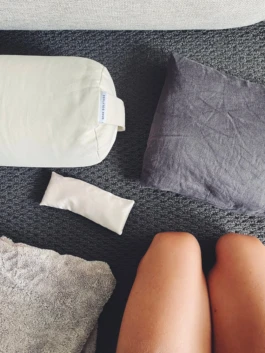
Some of my yin prop collection that helps to support my rest practice
Firstly, if your stressful situation is able to be changed - please do so in a timely manner! Unfortunately, this is not always the case.
What we need to do is to support our body as much as possible until the stress levels have decreased or the stressor is removed. The antidote is rest. Rest does not mean sleep, although of course, optimal sleep is extremely important – even more so for someone with a heightened nervous system.
Rest means not doing anything, not multi-tasking, not walking while checking emails while listening to a podcast. It means lying in the sun. Doing yin yoga. Taking a nap if you want. It’s not exercise, it’s rest.
Notes
A little while ago I asked over on my instagram what forms of rest people enjoy and I received some amazing answers:
• Listening to my body
• Taking a nap or having a sleep when I need to
• Yin yoga
• Yoga nidra
• Float tanks
• Massages
• Eating mindfully
• Implementing NPS; no plans Sunday
• Do what brings me joy
• Infrared saunas
• Reiki
I personally love reading before bed to wind down, and doing short yin sessions at home throughout my week. Even if I only have 10 minutes, I will do 10 minutes and then feel the benefits for the following hours. I loved the idea of NPS and feel like we could all benefit from the occasional NPW (no plans weekend)! If you want to read more about tangible things you can do to support your stress levels and nervous system, you may enjoy reading this blog. If you are struggling with stress would like help with managing and supporting this, please reach out or leave a comment below.
I loved the idea of NPS and feel like we could all benefit from the occasional NPW (no plans weekend)! If you want to read more about tangible things you can do to support your stress levels and nervous system, you may enjoy reading this blog.
If you are struggling with stress would like help with managing and supporting this, please reach out or leave a comment below.
Jaclyn is a qualified Naturopath with a focus on hormonal complaints, cycle health, reproductive and fertility care, skin issues, and adrenal health.
Author
Jaclyn Cave
BHSc (Nat), BComm (Soc)
Masters Womens Health Med (UNSW)

August 11, 2025
Stress is a physiological reaction by the body in response to a real or perceived threat.
Notes
Note that I’ve used the word perceived here, quite specifically! Many ‘threats’ to us these days are not true threats, but potential threats. Or they may feel threatening to us, but don’t truly threaten our lives. Our body doesn’t know the difference between a real life threat and a perceived threat, and therefore it responds in the same way.
Being in a state of stress is also known as being in the sympathetic nervous system state, commonly known as ‘fight, flight, or freeze’. Our body pumps out cortisol and adrenaline, heart rate increases, blood is diverted to our limbs, our pupils dilate, and we prepare for battle.
The other, much preferred option is known as the parasympathetic nervous system state, ‘rest, digest, and reproduce’. Our muscles relax, blood heads toward our abdomen to digest our food, breath slows down, and our heart rate decreases. In this state we digest our food, create important hormones and neurotransmitters, and feel calm.
The problem today is that our body doesn’t know the difference between actual life-threatening situations (the classic example is being chased by a sabre-toothed tiger), or a perceived, future threat (an email ping from your demanding boss, a call from your frosty mother-in-law, reading the news, *insert your choice of unpleasantness here*).
Stress is necessary to keep us safe and alive, which is a pretty important task. However, prolonged, high stress states can lead to serious, detrimental health consequences. Unfortunately, I see these health consequences all too regularly with my patients.
01
So, what can we do about this?

Some of my yin prop collection that helps to support my rest practice
Firstly, if your stressful situation is able to be changed - please do so in a timely manner! Unfortunately, this is not always the case.
What we need to do is to support our body as much as possible until the stress levels have decreased or the stressor is removed. The antidote is rest. Rest does not mean sleep, although of course, optimal sleep is extremely important – even more so for someone with a heightened nervous system.
Rest means not doing anything, not multi-tasking, not walking while checking emails while listening to a podcast. It means lying in the sun. Doing yin yoga. Taking a nap if you want. It’s not exercise, it’s rest.
Notes
A little while ago I asked over on my instagram what forms of rest people enjoy and I received some amazing answers:
• Listening to my body
• Taking a nap or having a sleep when I need to
• Yin yoga
• Yoga nidra
• Float tanks
• Massages
• Eating mindfully
• Implementing NPS; no plans Sunday
• Do what brings me joy
• Infrared saunas
• Reiki
I personally love reading before bed to wind down, and doing short yin sessions at home throughout my week. Even if I only have 10 minutes, I will do 10 minutes and then feel the benefits for the following hours. I loved the idea of NPS and feel like we could all benefit from the occasional NPW (no plans weekend)! If you want to read more about tangible things you can do to support your stress levels and nervous system, you may enjoy reading this blog. If you are struggling with stress would like help with managing and supporting this, please reach out or leave a comment below.
I loved the idea of NPS and feel like we could all benefit from the occasional NPW (no plans weekend)! If you want to read more about tangible things you can do to support your stress levels and nervous system, you may enjoy reading this blog.
If you are struggling with stress would like help with managing and supporting this, please reach out or leave a comment below.
Jaclyn is a qualified Naturopath with a focus on hormonal complaints, cycle health, reproductive and fertility care, skin issues, and adrenal health.
Author
Jaclyn Cave
BHSc (Nat), BComm (Soc)
Masters Womens Health Med (UNSW)
Blending evidence-based medicine with traditional Naturopathic principles