The Journal
Helpful Tests for Perimenopause
June 18, 2025
If you’ve been noticing shifts like irregular cycles, waves of fatigue, brain fog, or bursts of frustration that are out of character for you, you might be wondering if perimenopause is beginning to weave its way into your life. Perimenopause is the transitional phase between your reproductive years and menopause and typically emerges in your 40s but can start earlier. This period can bring with it strong hormonal fluctuations that influence your cycle, energy, and mood, as well as the classic peri symptoms often discussed such as hot flushes, mood swings, and weight gain.
While there’s no single ‘perimenopause blood test’ to confirm you are in this phase, a thoughtful selection of assessments can help us understand what’s happening and rule out other factors that may be contributing to how you feel.
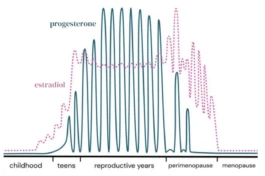
Note the fluctuating and then declining levels of both oestrogen and progesterone in the perimenopause phase. These are what are often responsible for symptoms during this time. Image credit
Here are tests you may like to consider:
- Follicle-stimulating hormone (FSH). Elevated FSH on days 2-3 of your cycle may suggest declining ovarian reserve, a hallmark of perimenopause. Levels can fluctuate widely, it can be helpful to compare your current to previous results to really see what is going on.
- Luteinising Hormone (LH). If we see a rising trend in LH alongside an FSH, this may indicate perimenopausal shifts. Elevated LH alone can be due to other factors (commonly PCOS) so it’s crucial to test this alongside FSH.
- Oestrogen. Test on days 2-3 of your cycle. Low levels can signal reduced oestrogen production. High levels may indicate perimenopausal fluctuations. Oestrogen is best read in context alongside other hormones.
- Progesterone. Low levels in your luteal phases are common in perimenopoause, when ovulation becomes less predictable. Low progesterone can affect mood and disrupt cycle lengths. Test 7 days after ovulation or 7 days before a predicted period.
- Anti-Müllerian Hormone (AMH). Reflects ovarian egg reserve, which declines as we age, with levels typically becoming undetectable by menopause.
- Androgens (testosterone, DHEAS, SHBG, and FAI). Androgens decline in perimenopause, impacting energy, libido, mood, and the ability to build muscle.
- Thyroid function tests (TSH, T3, T4). Hypothyroidism can lead to fatigue, weight gain, and brain fog. The ideal TSH range sits between 1 - 2, higher or lower levels are worth exploring.
- Cholesterol panel (Total cholesterol, triglycerides, HDL, LDL, non-HDL). The decline in oestrogen in perimenopause affects lipid metabolism, which can result in an increase in triglycerides and LDL cholesterol, and a decrease in HDL cholesterol.
- Iron studies. Deficiency can cause exhaustion and brain fog. Target ferritin levels are >50 µg/L, levels below 30 µg/L may contribute to your symptoms.
- Vitamin D. Low levels can affect mood, energy, and bone health. The optimal range is > 80 nmol/L.
- Vitamin B12. Low levels can lead to fatigue and low moods. B12 is contained in all animal foods. Aim for >400 pmol/L for total B12 levels.
- Insulin. Elevated levels can contribute to hormonal issues, fatigue, and weight gain. Always test fasted, aiming for around 4 mU/L. Levels close to 10 may indicate insulin resistance.
- HbA1c. Reflects our longer-term (3 month) blood sugar control. Healthy levels sit around 5%.
- Nervous system. An overburdened nervous system can affect every aspect of your life - mood, energy, sleep, and weight, to name a few. Adrenal stress levels can be assessed in a session, and/or via a salivary cortisol profile.
It’s important to note that while these tests provide valuable clues, they aren’t conclusive on their own. What they can do is point you in the right direction by highlighting trends and ruling out deficiencies that may be contributing to how you feel. The hallmark hormone picture of perimenopause and menopause - high levels of FSH and LH signalling that your ovaries are not responding to these gonadotrophins - are a very helpful start! Furthermore, conditions like iron deficiency, low vitamin D levels, or blood sugar issues can mimic perimenopause, and excess stress or thyroid dysfunction can amplify the symptoms.
For a deeper dive into how to support and manage perimenopause, I suggest reading A Holistic Approach to Supporting Perimenopause, where I discuss utilising dietary tools, lifestyle interventions, nutritional supplementation, and herbal medicine for this life phase.
Author
Jaclyn Cave
BHSc (Nat), BComm (Soc)
Masters Womens Health Med (UNSW)
The Journal
Helpful Tests for Perimenopause
June 18, 2025
If you’ve been noticing shifts like irregular cycles, waves of fatigue, brain fog, or bursts of frustration that are out of character for you, you might be wondering if perimenopause is beginning to weave its way into your life. Perimenopause is the transitional phase between your reproductive years and menopause and typically emerges in your 40s but can start earlier. This period can bring with it strong hormonal fluctuations that influence your cycle, energy, and mood, as well as the classic peri symptoms often discussed such as hot flushes, mood swings, and weight gain.
While there’s no single ‘perimenopause blood test’ to confirm you are in this phase, a thoughtful selection of assessments can help us understand what’s happening and rule out other factors that may be contributing to how you feel.
Note the fluctuating and then declining levels of both oestrogen and progesterone in the perimenopause phase. These are what are often responsible for symptoms during this time. Image credit
Here are tests you may like to consider:
- Follicle-stimulating hormone (FSH). Elevated FSH on days 2-3 of your cycle may suggest declining ovarian reserve, a hallmark of perimenopause. Levels can fluctuate widely, it can be helpful to compare your current to previous results to really see what is going on.
- Luteinising Hormone (LH). If we see a rising trend in LH alongside an FSH, this may indicate perimenopausal shifts. Elevated LH alone can be due to other factors (commonly PCOS) so it’s crucial to test this alongside FSH.
- Oestrogen. Test on days 2-3 of your cycle. Low levels can signal reduced oestrogen production. High levels may indicate perimenopausal fluctuations. Oestrogen is best read in context alongside other hormones.
- Progesterone. Low levels in your luteal phases are common in perimenopoause, when ovulation becomes less predictable. Low progesterone can affect mood and disrupt cycle lengths. Test 7 days after ovulation or 7 days before a predicted period.
- Anti-Müllerian Hormone (AMH). Reflects ovarian egg reserve, which declines as we age, with levels typically becoming undetectable by menopause.
- Androgens (testosterone, DHEAS, SHBG, and FAI). Androgens decline in perimenopause, impacting energy, libido, mood, and the ability to build muscle.
- Thyroid function tests (TSH, T3, T4). Hypothyroidism can lead to fatigue, weight gain, and brain fog. The ideal TSH range sits between 1 - 2, higher or lower levels are worth exploring.
- Cholesterol panel (Total cholesterol, triglycerides, HDL, LDL, non-HDL). The decline in oestrogen in perimenopause affects lipid metabolism, which can result in an increase in triglycerides and LDL cholesterol, and a decrease in HDL cholesterol.
- Iron studies. Deficiency can cause exhaustion and brain fog. Target ferritin levels are >50 µg/L, levels below 30 µg/L may contribute to your symptoms.
- Vitamin D. Low levels can affect mood, energy, and bone health. The optimal range is > 80 nmol/L.
- Vitamin B12. Low levels can lead to fatigue and low moods. B12 is contained in all animal foods. Aim for >400 pmol/L for total B12 levels.
- Insulin. Elevated levels can contribute to hormonal issues, fatigue, and weight gain. Always test fasted, aiming for around 4 mU/L. Levels close to 10 may indicate insulin resistance.
- HbA1c. Reflects our longer-term (3 month) blood sugar control. Healthy levels sit around 5%.
- Nervous system. An overburdened nervous system can affect every aspect of your life - mood, energy, sleep, and weight, to name a few. Adrenal stress levels can be assessed in a session, and/or via a salivary cortisol profile.
It’s important to note that while these tests provide valuable clues, they aren’t conclusive on their own. What they can do is point you in the right direction by highlighting trends and ruling out deficiencies that may be contributing to how you feel. The hallmark hormone picture of perimenopause and menopause - high levels of FSH and LH signalling that your ovaries are not responding to these gonadotrophins - are a very helpful start! Furthermore, conditions like iron deficiency, low vitamin D levels, or blood sugar issues can mimic perimenopause, and excess stress or thyroid dysfunction can amplify the symptoms.
For a deeper dive into how to support and manage perimenopause, I suggest reading A Holistic Approach to Supporting Perimenopause, where I discuss utilising dietary tools, lifestyle interventions, nutritional supplementation, and herbal medicine for this life phase.
Author
Jaclyn Cave
BHSc (Nat), BComm (Soc)
Masters Womens Health Med (UNSW)
Blending evidence-based medicine with traditional Naturopathic principles